Homophobia leads to zombification in this brooding horror film from the Dominican Republic. A film that leaves plenty to talk about afterwards.
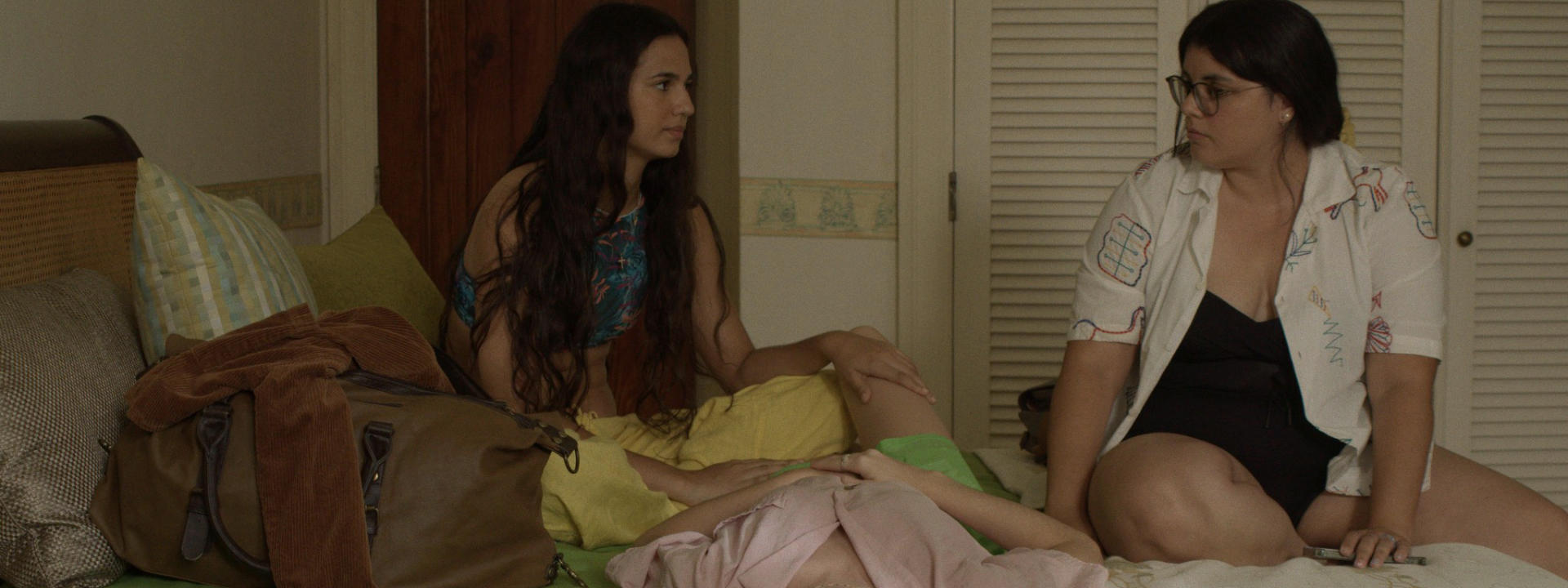
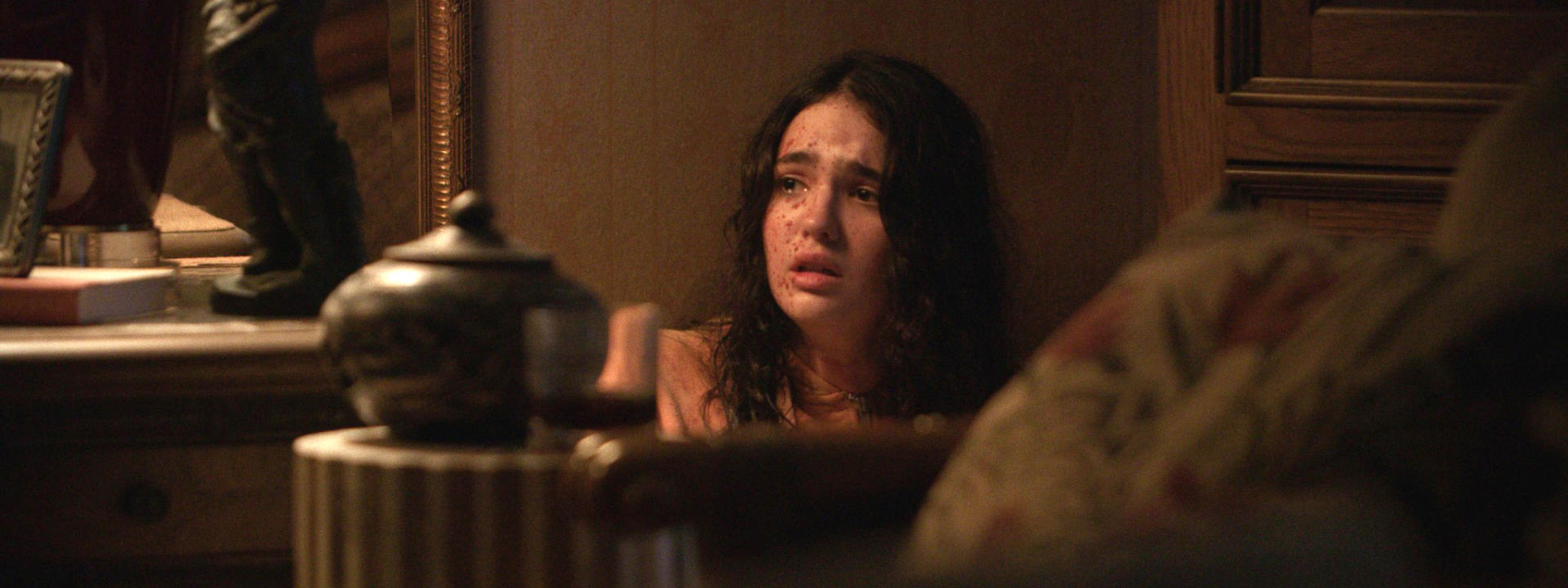
No Salgas is the kind of horror film that wisely refuses to explain too much. Where does the evil in this Dominican queer coming-of-age story come from? What does it actually want? Those are questions the viewer is left to answer for themselves. One thing is certain: something is deeply wrong on the Caribbean island.
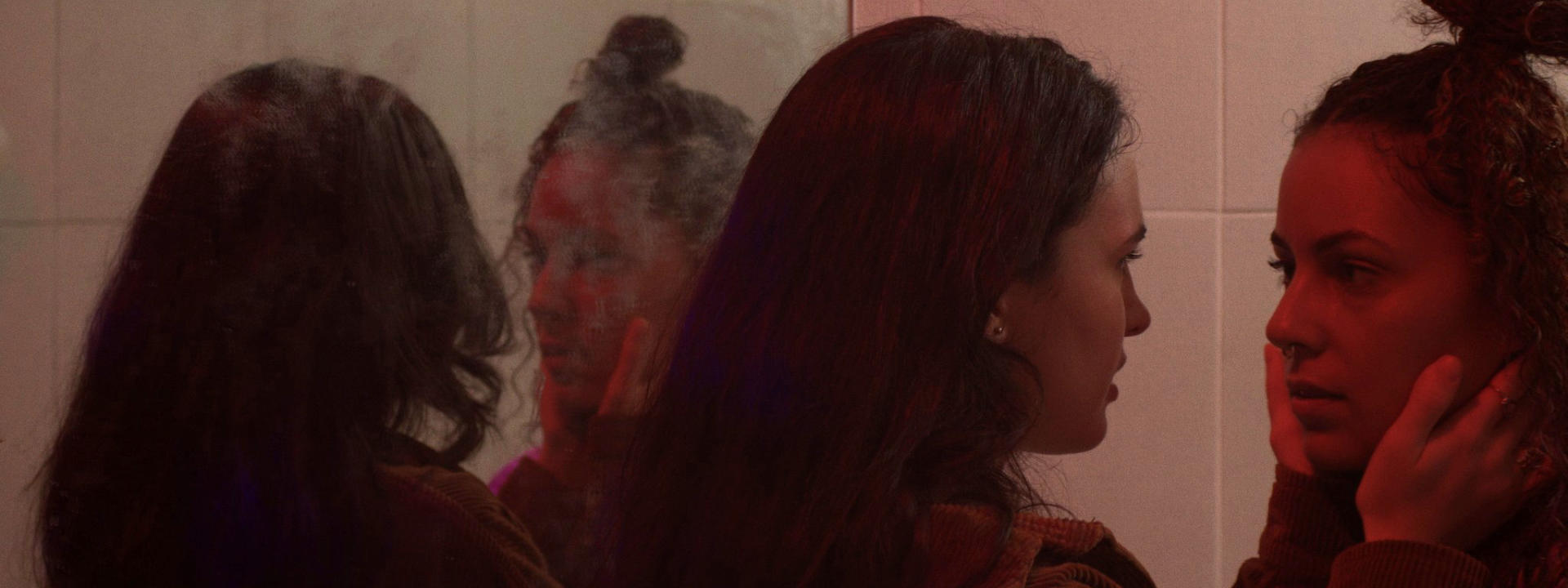
Anyone who hasn’t figured that out from the film’s bloody in medias res opening soon will, when medical student Liz’s girlfriend is murdered by a sinister force. To distract her from this traumatic event, Liz’s friends take her away for a weekend outside the city. There she meets the charismatic Jessie (Camila Santana). The two are undeniably drawn to one another. But can Liz (Cecile van Welie) bring herself to open her heart to romance again?
Director Victoria Linares Villegas drew on her own experiences. Growing up as a young lesbian woman in the conservative Dominican Republic was marked by fear and uncertainty. She distilled those feelings into the screenplay for No Salgas (her feature debut, following several documentaries). In doing so, Villegas joins a tradition of filmmakers who have found in horror the perfect vehicle for expressing the queer experience. Think, for example, of Jane Schoenbrun and her recent horror triumph I Saw the TV Glow.
In No Salgas, homophobia is the monster. Hatred manifests itself quite literally as a virus that turns people into zombies, robbing them of their capacity for thought and empathy. And yet No Salgas cannot simply be reduced to a set of straightforward metaphors. The film remains too elusive for that, leaving ample room for viewers to draw their own conclusions. Is homophobia an external social evil? An internalised monster that must be overcome? Or an imagined evil? No Salgas offers more than enough to discuss.
That ambiguity also stems from Villegas’s distinctive artistic choices. She is willing to take her time, patiently building romantic tension. Her characters circle one another, stealing furtive glances. The result is a film that is, even more than a horror film, a wonderfully understated coming-of-age story. It unfolds at the languid pace of summer, with long afternoons by the pool and endless gossip about who’s sleeping with whom. In the process, Villegas creates an original and deeply personal portrait of the Dominican Republic’s Gen Z middle class. This is a film in which the characters are not—unlike those in more cynical American slashers—mere cannon fodder, but flesh-and-blood people. With feelings and thoughts. Hopes and desires. And as viewers, we come to share those desires.