
An Argentinian policeman slips across the border into Uruguay with no money and no plan, and turns out to know a surprising amount about cheese. Un cabo suelto is a gloriously deadpan comedy about disappearing and starting again, drifting from thriller to western to love story without you ever quite noticing.


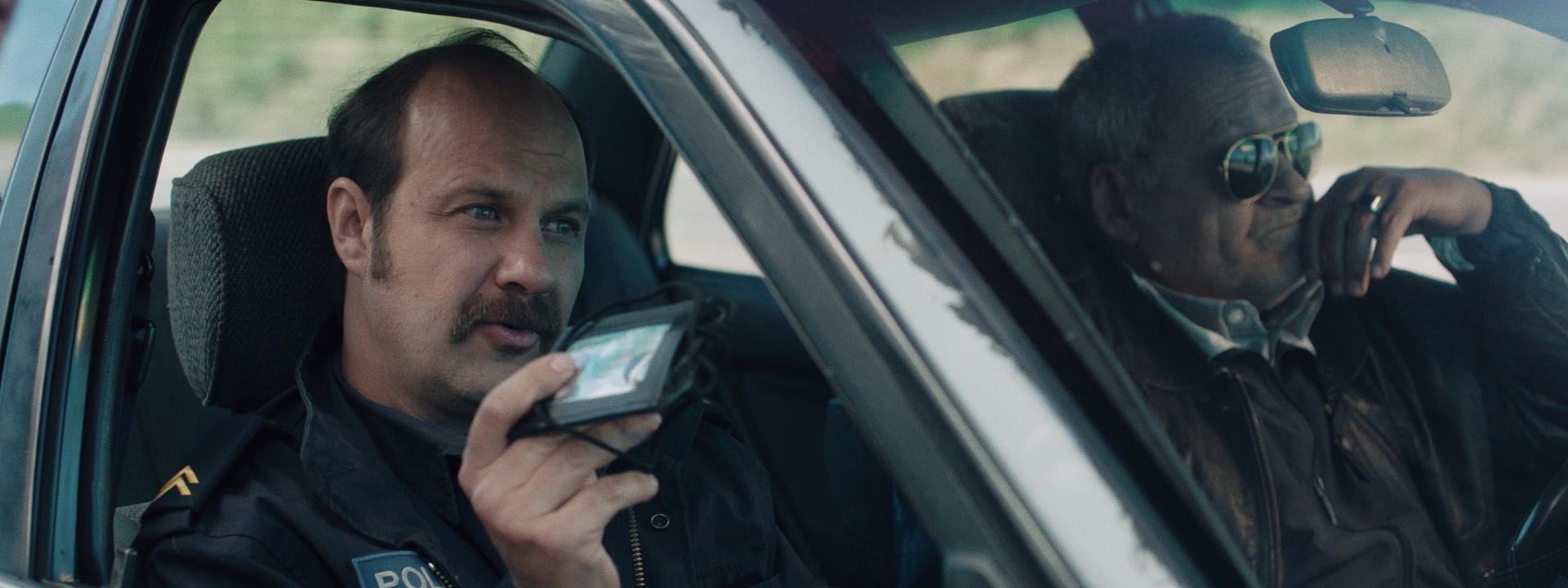
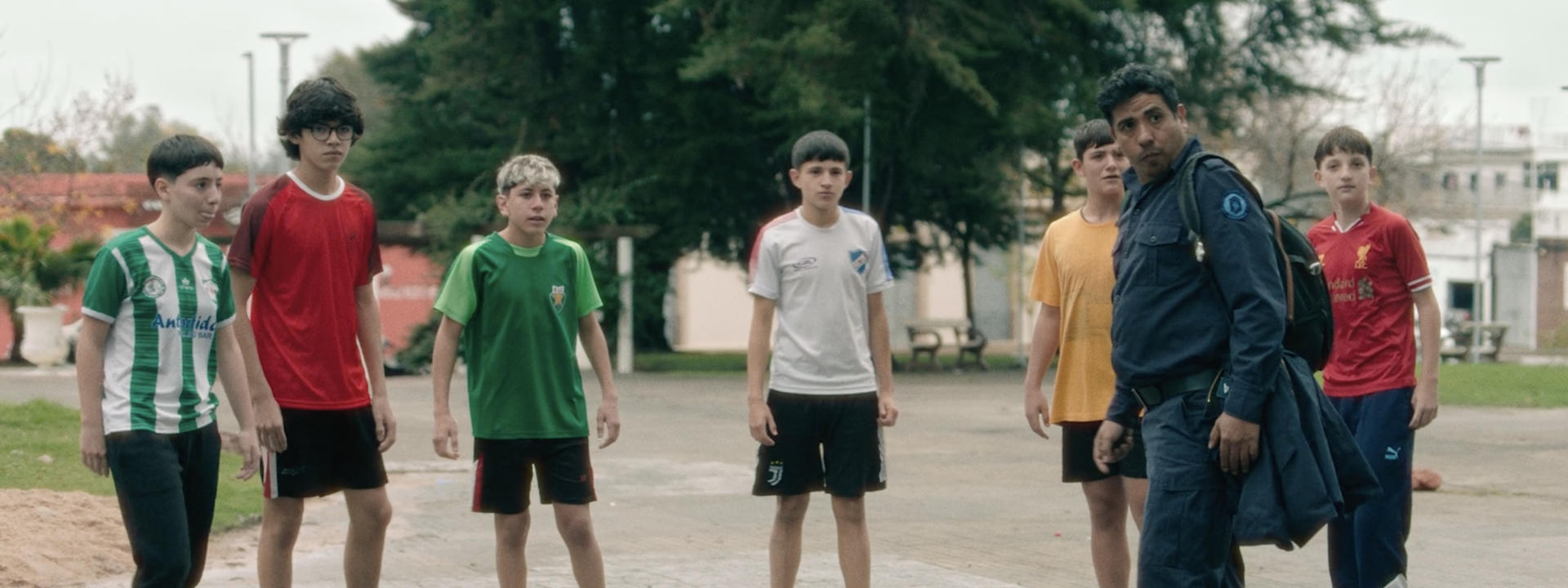

The title is a pun that only works in Spanish. A cabo is a corporal, roughly the lowest rank you can hold in the police. The same word also means the loose end of a rope. So Un cabo suelto is both “a corporal on the loose” and “a loose end”, exactly the sort of loose end that gets tidied away in a crime story before it gives someone away. Both readings apply.
Santiago (Sergio Prina) is that corporal. He knows too much about two crooked colleagues, and they would rather see the back of him. So he crosses into Uruguay, where he mostly tries not to stand out. In the duty-free shop on the border he meets a shop assistant (Pilar Gamboa), and what starts there is one of the most hesitant, most disarming flirtations of the year.
Who Santiago really is, and why he is running, stays pleasantly murky for a long while. Hendler gives his main character almost no backstory, and it pays off: you get to know him the way the people he meets along the road get to know him, bit by bit. Somewhere in there it turns out he knows everything there is to know about cheese, something the film wisely never explains and that comes in rather handy.
Hendler films calmly and quietly, with very little camera movement, which gives the dry humour all the room it needs. Underneath runs a soundtrack of sparse, scraping bursts of electric guitar, reverb turned right up. Everything here is understatement, and that is exactly why it stays with you.
In Latin America, Daniel Hendler is best known as an actor, and you can tell: the humour is gentle, the timing is everything, and nobody in this film ever tries to be funny. It had its world premiere in Venice and picked up a special mention from the jury in San Sebastián.
What begins as a manhunt slowly turns into something else entirely: the story of a man who can only become someone once he has lost everything. The border here is not a dangerous line but an invitation. You come out of the film with a strange sense of relief, as if you had briefly vanished yourself.